
The Conflict Between Self-Image and Reality
The FallTracks Clamence's internal struggle as his idealized self-image collides with the truth of his actions.
increasing Bearing strength in each event
 decreasing
Bearing strength in each eventdecreasingThe Perfect Image
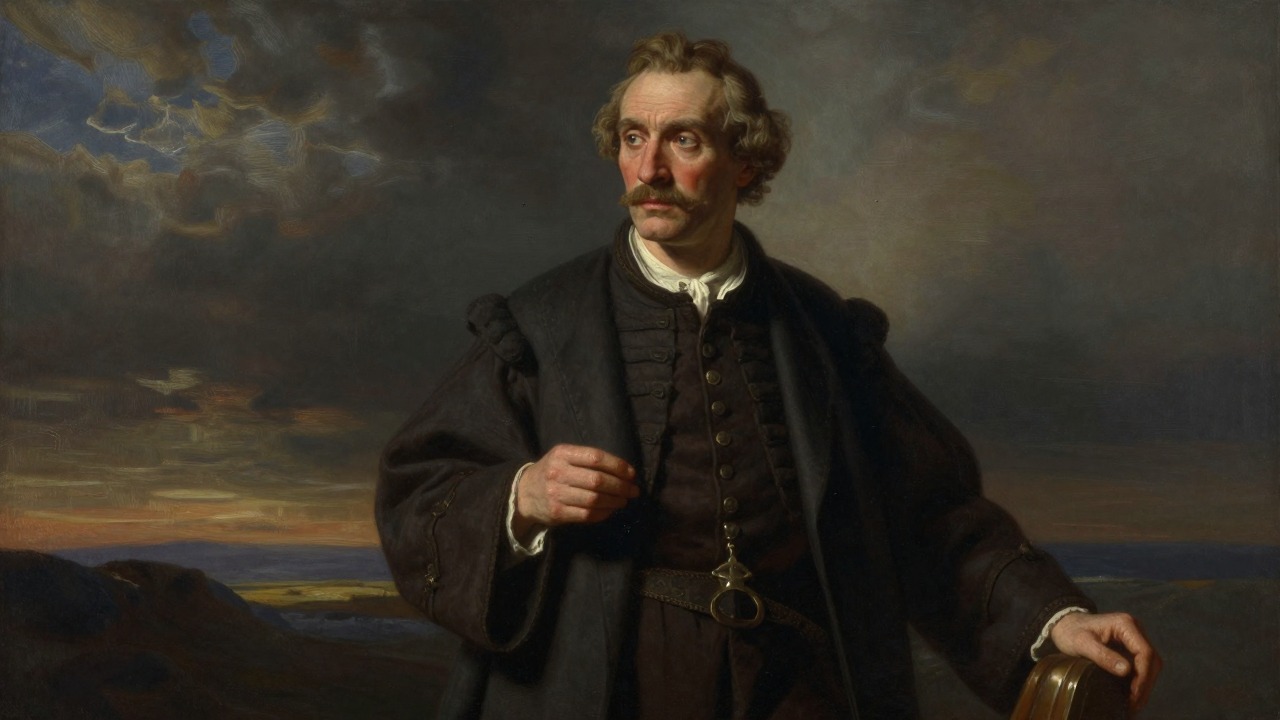
The god of the summits
A harmonious life
Clamence saw himself as a complete man, successful in all things. He was generous, polite, and loved by all. He believed in his own virtue. His self-image was flawless.
The underlying falsehood
But this image was built on the suppression of his faults. He had never faced his own vanity, his need for domination, his indifference to others. The image was a mask, and he was unaware of it.
The Laugh as a Challenge
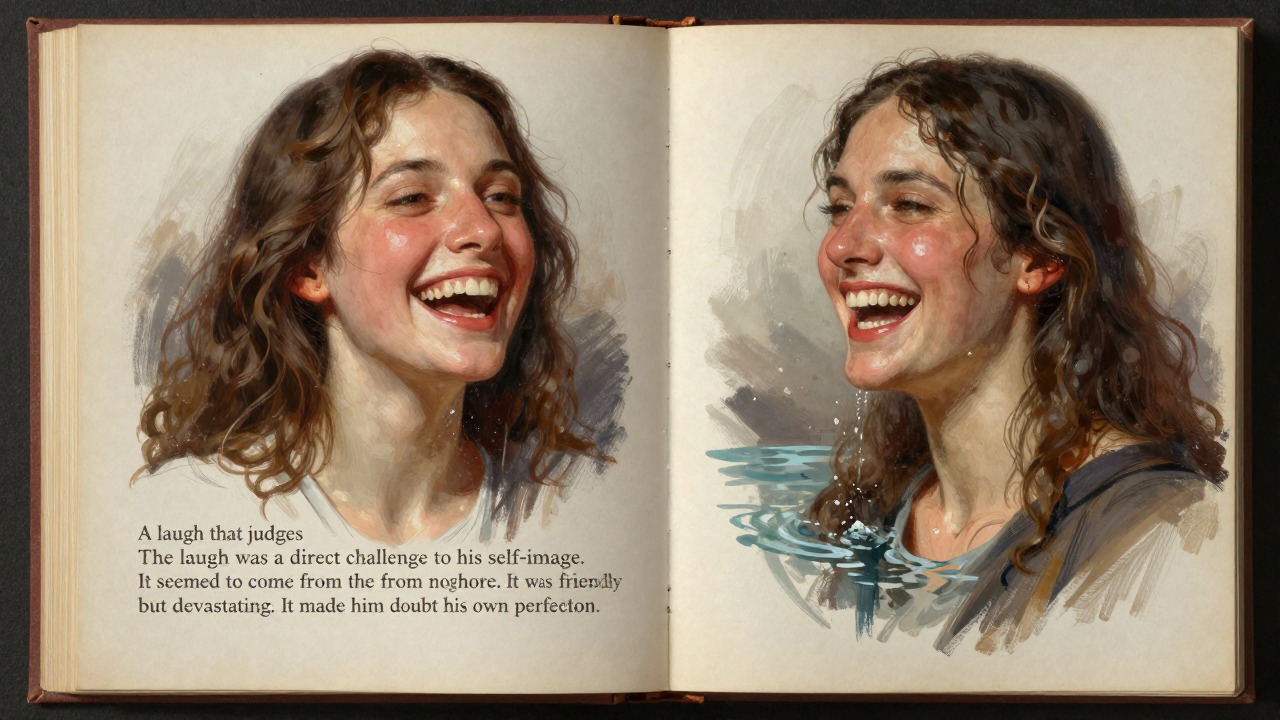
The sound of truth
A laugh that judges
The laugh was a direct challenge to his self-image. It seemed to come from the water, from nowhere. It was friendly but devastating. It made him doubt his own perfection.
The first crack
He began to realize that his smile was double. The laugh was a mirror showing him his duplicity. He couldn't ignore it. The conflict between his self-image and reality had begun.
The Humiliation of the Motorcycle
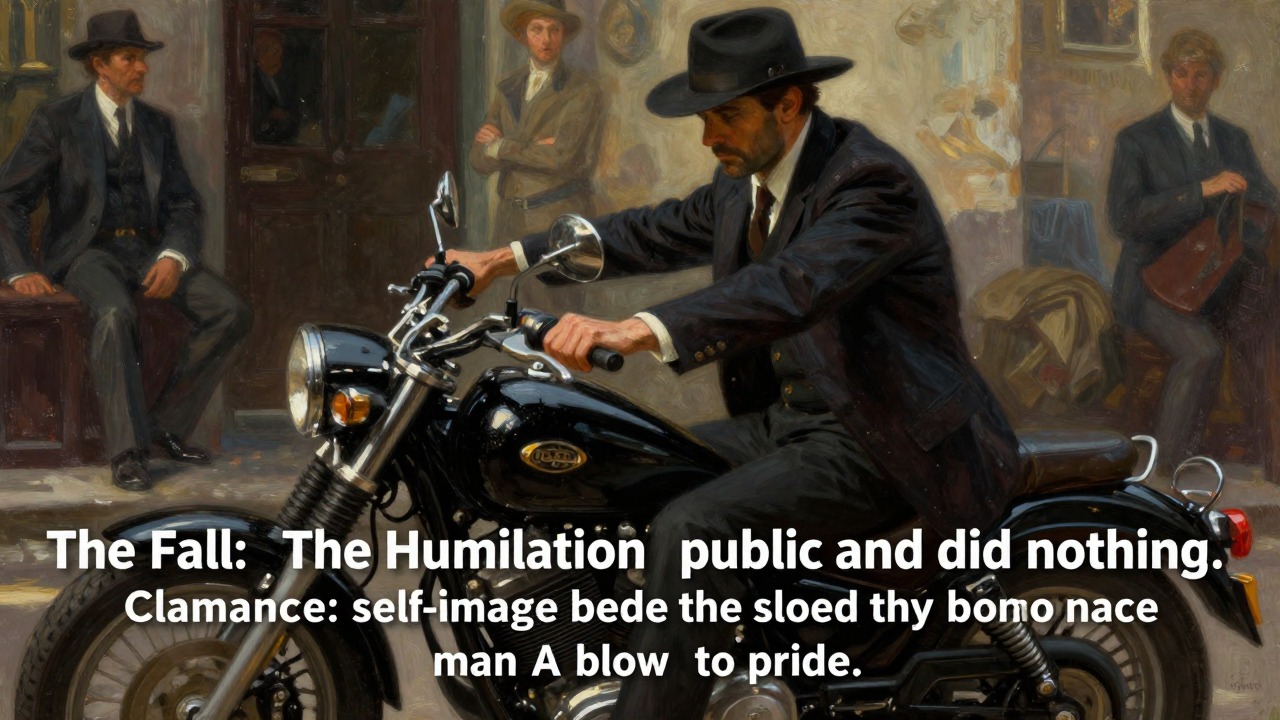
The public defeat
A blow to pride
Clamence was struck in public and did nothing. He was humiliated. This incident contradicted his self-image as a physically dominant man. He was not the strong man he thought he was.
The dream of the gangster
He realized he wanted to beat anyone, to be the stronger. The conflict between his civilized persona and his savage instincts deepened. He was not a man of peace but a potential oppressor.
The Discovery of Hypocrisy
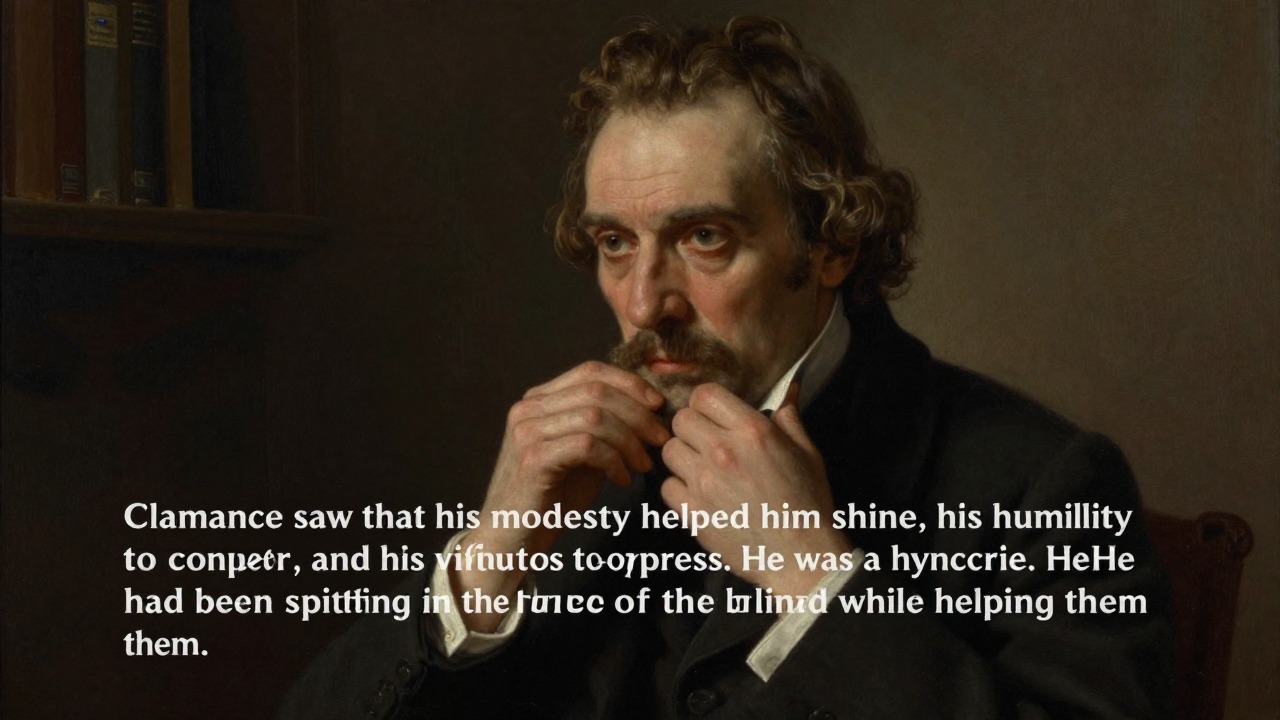
The unmasking
Virtues with reverse sides
Clamence saw that his modesty helped him shine, his humility to conquer, and his virtue to oppress. He was a hypocrite. He had been spitting in the face of the blind while helping them.
The unbearable truth
He couldn't bear the praise because it was false. He wanted to break the handsome wag-figure he presented. The conflict between his inner self and his outer image became unbearable. He had to find a way out.
The Resolution as Judge-Penitent
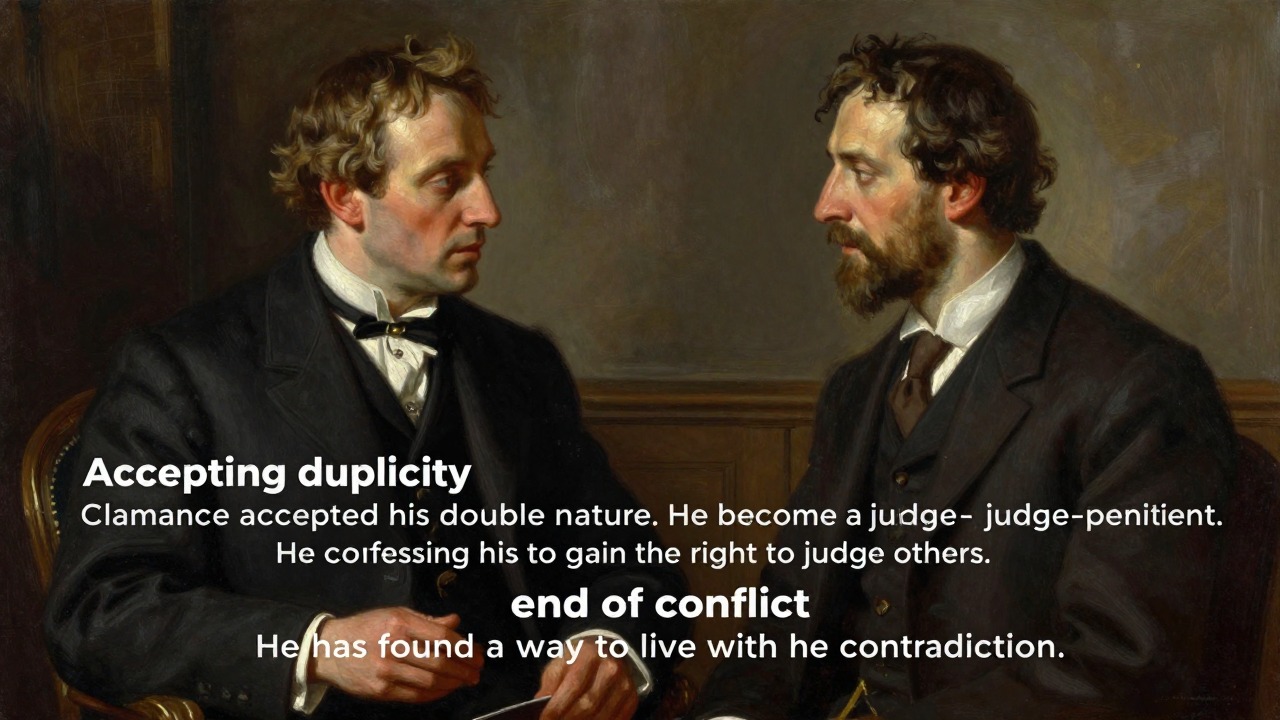
The synthesis of opposites
Accepting duplicity
Clamence accepted his double nature. He became a judge-penitent, confessing his sins to gain the right to judge others. He no longer tries to be innocent; he embraces guilt.
The end of conflict
He has found a way to live with the contradiction. He permits himself everything, while vociferously professing his infamy. The conflict is temporarily resolved by turning it into a performance. He is at peace, albeit a cynical peace.
Before the laugh, at his peak
On the Pont des Arts
Before the laugh, but remembered later
During his self-examination after the laugh
After his move to Amsterdam
